Salt Inhaler: Definition, History, and How It Works
A salt inhaler is a small device that allows a person to breathe air passing through natural salt crystals. It is designed to bring the traditional concept of salt-therapy into a simple, handheld form. When someone inhales through the mouthpiece, the air travels over the salt inside the chamber and carries tiny dry salt particles into the respiratory tract. This process is known as dry salt inhalation.
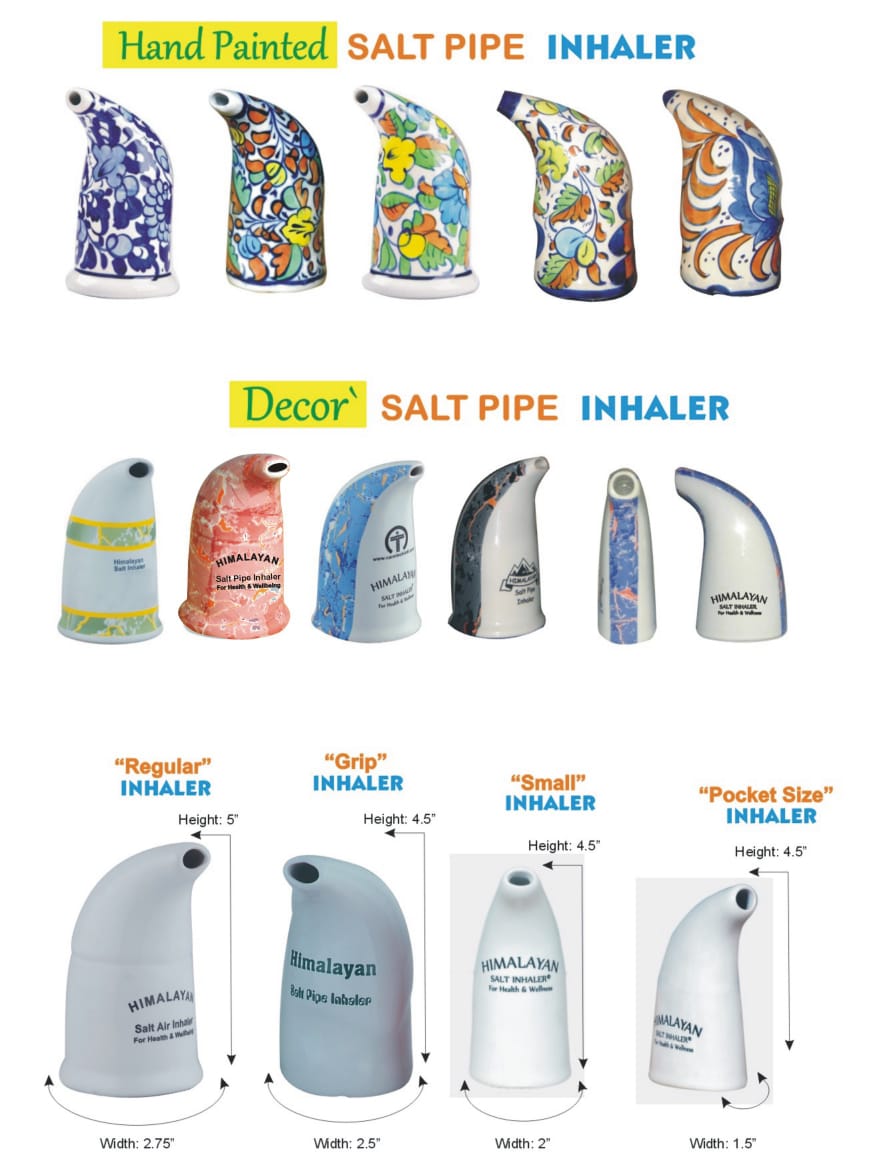
Salt inhalers are commonly made using ceramic or plastic, and they contain pure edible-grade salt, often Himalayan pink salt. They require no electricity, no filters, and no liquids, which makes them easy to use at home or while traveling.
Origin and History of Salt Therapy
Salt inhalation has a long history that stretches back many centuries. The earliest use of natural salt caves for health and breathing comfort can be traced to the regions of Eastern Europe and Central Asia.
Salt Caves in Ancient Times
Historical accounts describe how monks and local villagers would sit inside deep natural salt caves to experience easier breathing. These caves, found in areas like Poland, Romania, and Ukraine, contained naturally salty air that people believed helped calm their respiratory system.
The 19th Century Discovery
The most important turning point in the history of salt therapy happened in the 1840s. A Polish physician named Dr. Feliks Boczkowski was studying the working conditions of miners in the Wieliczka Salt Mine. He found that miners working in salt mines had cleaner airways, fewer breathing issues, and better respiratory health compared to people working above ground in polluted environments.
This observation led Dr. Boczkowski to establish the first medical salt-therapy rooms, where patients could sit and breathe salt-rich air in a controlled environment. These underground chambers became well-known across Europe for supporting respiratory comfort.
Modern Halotherapy Rooms
By the 20th century, countries like Poland, Hungary, Russia, and Germany developed artificial salt rooms, also called halotherapy chambers. These rooms used machines to crush salt into fine particles and release them into the air. Visitors would sit inside the room and breathe the salty air as part of natural wellness routines.
Invention of the Portable Salt Inhaler
As halotherapy became popular, researchers and manufacturers looked for ways to make salt inhalation more accessible to people who could not visit salt caves or therapy rooms. This led to the creation of the portable dry salt inhaler, a small device that could mimic the effect of breathing inside a salt cave.
The first ceramic salt inhalers were introduced in the late 20th century. Over time, plastic inhalers and compact designs also became available, making salt inhalation easy and affordable for everyday use.
What a Salt Inhaler Contains
A standard salt inhaler contains:
- A mouthpiece – where the user inhales.
- Air holes – usually located at the bottom or back to allow airflow.
- Salt chamber – filled with natural coarse salt crystals.
- Himalayan pink salt – commonly used because it is unprocessed, mineral-rich, and naturally dry.
Since no water or heat is used, the inhaler stays dry and clean for long periods. Many inhalers only need salt replacement every few months or even once a year, depending on usage.
How a Salt Inhaler Works
The working principle is simple but effective. When a user breathes through the inhaler:
- Air enters through the bottom holes.
- It passes through the salt crystals inside.
- Tiny dry salt particles attach to the air.
- The user inhales these particles into the respiratory passage.
This gentle airflow system does not involve steam, liquid vapor, or medication. The inhaler relies entirely on natural salt evaporation.
Why Himalayan Salt Is Commonly Used
Himalayan salt is one of the most popular choices for salt inhalers. This is because:
- It contains over 80 natural minerals.
- It is harvested from ancient sea salt deposits.
- It is free from chemicals and additives.
- It remains naturally dry and stable.
Its purity and mineral content make it an ideal option for dry salt inhalation devices.
How to Use a Salt Inhaler
Using a salt inhaler is simple and does not require technical skills. Here is the regular method:
- Hold the inhaler in your hand.
- Place the mouthpiece between your lips.
- Breathe in slowly and deeply.
- Exhale through your nose.
- Continue for about 10–15 minutes per session.
It is important not to exhale back into the inhaler because moisture from the breath can affect the salt inside.
Types of Salt Inhalers
Although the main function is the same, salt inhalers come in a few styles to suit different preferences:
Ceramic Salt Inhalers
These are the traditional models. They are durable, heat-resistant, and often shaped like small jugs. Ceramic inhalers are considered long-lasting and maintain the dryness of salt well.
Plastic Salt Inhalers
These are lightweight and portable. They are often used for travel or daily quick sessions. Some include removable lids for easy salt refill.
Electric Salt Inhalers
These modern devices use a small machine to break salt into finer particles, producing a consistent dry salt flow. They are typically more expensive but suitable for people who prefer deeper airflow.
Difference Between Salt Inhaler and Steam Inhaler
Many people confuse salt inhalers with steam inhalers, but both work differently:
- A salt inhaler uses dry salt particles and no liquid.
- A steam inhaler uses hot water vapor to moisten the airways.
Salt inhalers provide dry inhalation, while steam inhalers provide warm moisture. They are used for different purposes and are not interchangeable.
Maintenance and Care
A salt inhaler requires very little maintenance. To keep it clean and effective:
- Do not wash the inside (it damages the salt).
- Clean only the mouthpiece with a dry cloth.
- Replace salt as recommended by the manufacturer.
- Store it in a dry place.
Because the salt inside remains dry, the device stays fresh for long periods without growing bacteria or mold.
Conclusion
Salt inhalers bring the ancient tradition of salt cave breathing into a compact, easy-to-use device. Their history goes back to natural salt caves of Europe and the observations made by physicians studying miners’ respiratory health. Today, salt inhalers offer a simple method of dry salt inhalation using natural Himalayan salt.
They remain popular worldwide because of their simplicity, natural composition, and long-standing traditional background. Whether ceramic or plastic, a salt inhaler continues the centuries-old belief that breathing salty air can support comfort and clarity in the respiratory system.
For More Information Click Here